
architects
Mewton & Grounds
‘Woy Woy’ was designed by the highly influential architect Geoffrey Mewton of Mewton & Grounds. It represents an influential exposition of radical modernist ideas that influenced him whist working and travelling in America and Europe in the late 1920s early 1930s. On returning home to Melbourne, Mewton set up his own office. A year later Roy Grounds returned to Melbourne and the pair formed the office Mewton & Grounds. Their partnership was informal and each worked individually, collecting their own profits. Quickly the pair became acknowledged as amongst the chief protagonists of modernism in Melbourne.
about
the building
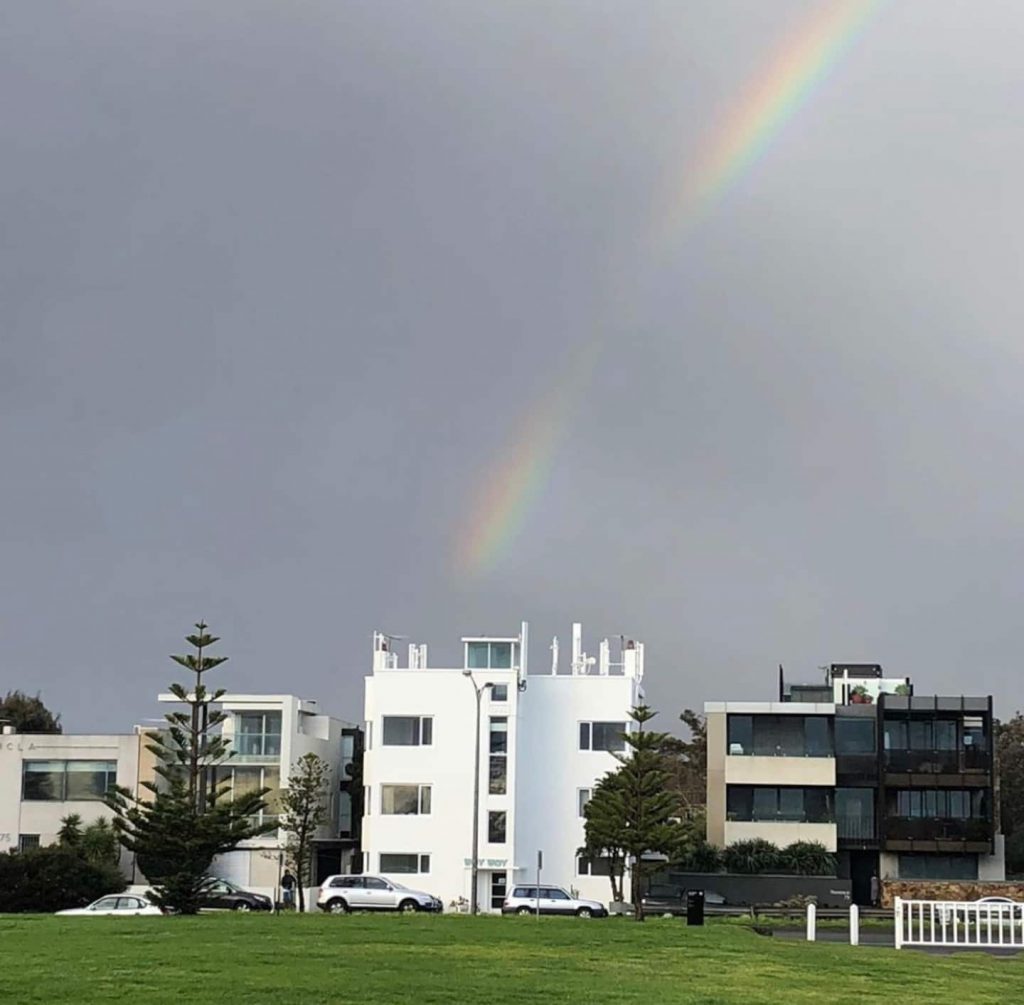
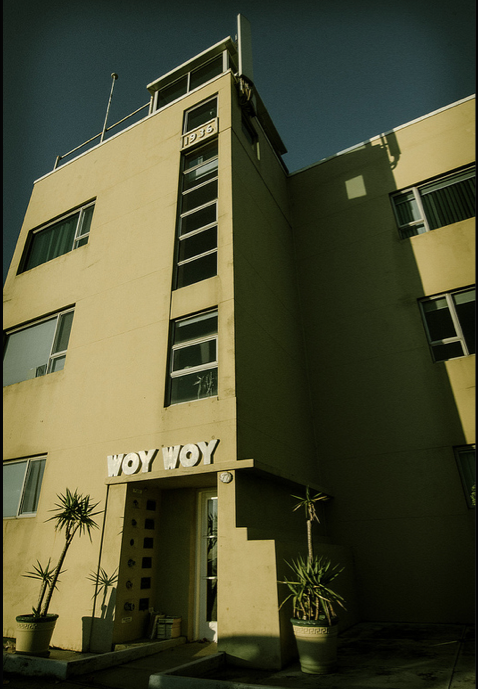
The building is a three-storey block comprising of 6 one-bedroom flats with the top two having been converted into one. Another block was planned for the rear of the property providing a central courtyard with entrance via Lytton street but never eventuated. The land allotment is 639m The interiors were tightly planned maximising function into a minimum space. Decoration throughout is austere aside from the playful Woy Woy lettering above the front door.

changes &
Renos
In the 1980s The front stairs were extended to the rooftop. A turret added for roof access. The 1936 was added at this time. The front and city side windows on level 1 and 2 had their sills lowered by 250mm. The wooden window frames replaced by aluminium and the glass had a greenish tinge.
In 2019/20 the building underwent a major renovation painted white, with white window frames, clear glass and the eponymous Woy Woy painted in a beauty grey green. Each apartment is bright, breezy and beachy and some are available to rent for short stays.

Modernist architecture was an architectural style based upon new and innovative technologies of construction, particularly the use of glass, steel, and reinforced concrete; the idea that form should follow function (functionalism); an embrace of minimalism; and a rejection of ornament. Functionalist architecture, functionalism is the principle that buildings should be designed based solely on the purpose and function of the building. … In the wake of World War I, an international functionalist architecture movement emerged as part of the wave of Modernism.